

Touch Trainer for Interactive Sensory
₹578.20
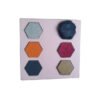
Touch Trainer for Interactive Sensory from Edischoolmart is an engaging educational learning aid designed to enhance sensory perception, fine motor skills, and hand-eye coordination in children. Ideal for early learning classrooms, special education, and Montessori environments, this interactive teaching aid encourages tactile exploration through guided touch-based activities. Moreover, it helps children improve focus, grip control, and cognitive response while learning through hands-on play. As a result, Touch Trainer supports holistic child development in a fun and meaningful way.
- Enhances tactile sensory awareness
- Improves fine motor and hand-eye coordination
- Ideal for Montessori & special education use
- Child-safe, durable learning material
- Supports early cognitive development
Touch Trainer for Interactive Sensory Learning belongs to the Early Learning Educational Toys & Teaching Aids category and actively strengthens tactile discrimination and sensory processing skills. By enabling children to explore textures, shapes, and guided touch points, it encourages hands-on sensory engagement. As a result, children experience sensory integration through a learning process that remains both structured and playful.
- Fine Motor Skill Development
Secondly, this interactive learning tool actively promotes controlled finger and hand movements. Consequently, children develop a stronger grip, improved finger dexterity, and better muscle coordination. Moreover, these abilities directly support writing readiness and everyday functional skills. - Supports Cognitive & Focus Skills
In addition, repetitive touch-based activities help children improve attention span, memory recall, and response accuracy. Therefore, the Touch Trainer effectively supports children with learning delays, ADHD, or sensory processing challenges. Furthermore, consistent use boosts cognitive engagement and focus over time. - Ideal for Multiple Learning Environments
Likewise, the Touch Trainer fits seamlessly into Montessori classrooms, preschools, therapy centers, and home learning setups. Thus, teachers, therapists, and parents can easily integrate it into individual and group learning sessions. As a result, it consistently supports structured skill-building across diverse educational environments. - Safe, Durable & Child-Friendly
Equally important, the Touch Trainer uses high-quality, non-toxic, and smooth-finished materials to ensure child safety. Therefore, children can use it confidently during daily learning activities. Additionally, its sturdy construction delivers long-lasting performance even with repeated classroom handling. - Encourages Independent & Guided Learning
Finally, children actively engage with the Touch Trainer either independently or with adult guidance. As a result, it builds self-confidence, strengthens independent problem-solving, and supports guided instruction simultaneously. Ultimately, this balanced approach enhances both autonomy and guided learning outcomes.


Reviews
There are no reviews yet.